

Navigating Pilot Professional Growth: A Comprehensive Guide

Becoming a pilot is a dream for many, but the journey from novice to seasoned aviator involves a series of well-defined steps and continuous professional development. This article explores the various stages of pilot professional growth, offering practical insights and actionable advice for those interested in taking to the skies. Whether you are just starting or looking to advance your career, understanding the pilot career path is essential for success.
Understanding Pilot Professional Growth
Pilot professional growth is a dynamic process that involves acquiring skills, certifications, and experience over time. It starts with basic flight training and can lead to advanced roles such as airline captain or flight instructor. Each stage requires dedication, discipline, and a commitment to safety.
Initial Training: Aspiring pilots begin with obtaining a Private Pilot License (PPL), which allows them to fly small aircraft for personal use.
Advanced Certifications: After the PPL, pilots pursue a Commercial Pilot License (CPL) and often an Instrument Rating (IR) to fly in various weather conditions.
Building Flight Hours: Accumulating flight hours is crucial. Many pilots work as flight instructors or in regional airlines to gain experience.
Airline Transport Pilot License: The highest certification, required to act as a captain for commercial airlines.
Each step in this progression builds on the previous one, emphasizing both technical skills and decision-making abilities.

Training and Education Requirements
The foundation of a successful pilot career lies in rigorous training and education. Flight schools and aviation academies provide structured programs that combine classroom learning with hands-on flight experience.
Ground School: Covers aerodynamics, navigation, meteorology, and aviation regulations.
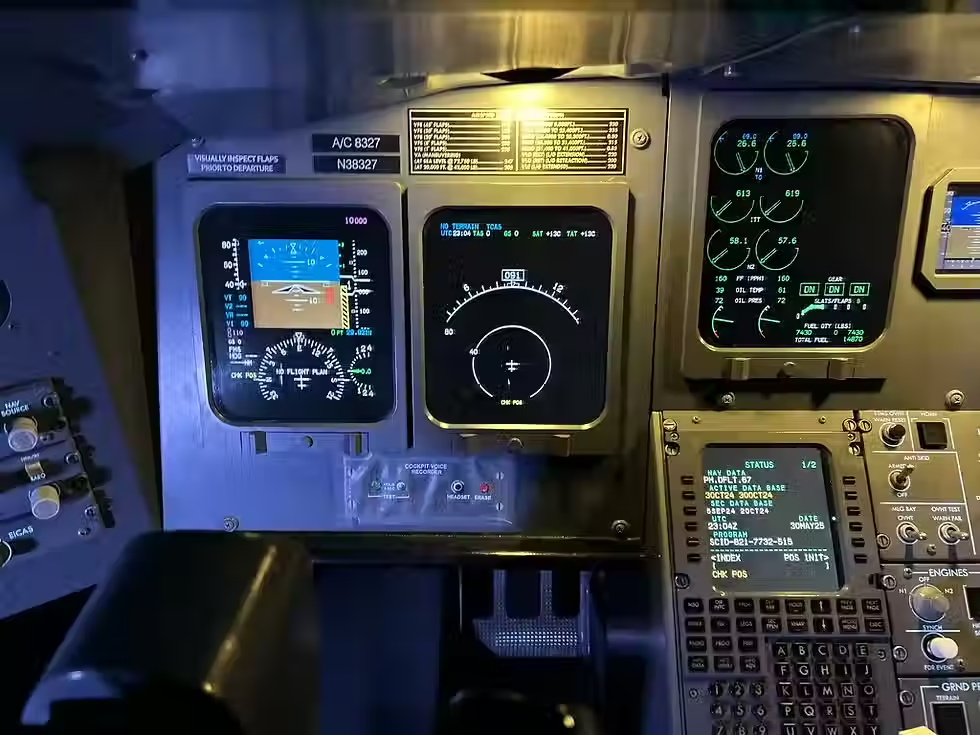
Simulator Training: Allows pilots to practice emergency procedures and complex maneuvers in a controlled environment.
Flight Hours: Regulatory bodies require a minimum number of flight hours before certification. For example, the FAA mandates at least 250 hours for a CPL.
Medical Certification: Pilots must pass regular medical exams to ensure they meet health standards.
Choosing an accredited flight school with experienced instructors can significantly impact the quality of training and future opportunities.
What pilots make $200,000 a year?
Earning a high salary as a pilot depends on several factors including experience, type of aircraft, and employer. Pilots who make $200,000 a year or more typically hold senior positions in major airlines or specialized sectors.
Airline Captains: Senior captains flying international routes for major carriers often reach this salary range.
Corporate Pilots: Pilots flying private jets for corporations or high-net-worth individuals can earn competitive salaries.
Cargo Pilots: Experienced pilots working for large cargo airlines on long-haul flights may also achieve this income.
Specialized Roles: Test pilots or those involved in aviation training and safety consulting can command high pay.
Advancing to these roles requires years of experience, excellent flying skills, and often additional certifications.

Career Advancement Opportunities
The pilot profession offers various pathways for advancement beyond flying. Many pilots transition into roles that leverage their expertise in aviation.
Flight Instructor: Teaching new pilots and helping them gain flight hours.
Check Airman: Evaluating and training other pilots within an airline.
Flight Dispatcher: Planning flight routes and coordinating with pilots.
Aviation Management: Positions in airline operations, safety, or regulatory agencies.
Simulator Instructor: Training pilots using advanced flight simulators.
Networking, continuous education, and obtaining additional ratings such as multi-engine or type ratings can open doors to these opportunities.
Tips for Success in the Pilot Profession
Success in the pilot profession requires more than just flying skills. Here are some practical recommendations:
Stay Current: Regularly update your knowledge of aviation regulations and technology.
Build Experience: Seek diverse flying opportunities to broaden your skill set.
Maintain Physical Fitness: Pass medical exams and stay healthy to meet the demands of flying.
Develop Soft Skills: Communication, leadership, and decision-making are critical in the cockpit.
Plan Financially: Flight training can be expensive; consider scholarships, loans, or sponsorship programs.
Network: Join aviation organizations and attend industry events to connect with professionals.
By following these tips, pilots can enhance their career prospects and enjoy a fulfilling professional journey.
Embracing the Future of Aviation
The aviation industry is evolving rapidly with advancements in technology such as electric aircraft, automation, and improved navigation systems. Pilots must adapt to these changes to remain competitive.
Continuous Learning: Engage in recurrent training and familiarize yourself with new aircraft systems.
Sustainability Focus: Understanding eco-friendly practices and regulations will be increasingly important.
Technological Proficiency: Comfort with digital tools and data analysis can improve operational efficiency.
Embracing innovation will not only improve safety but also open new career avenues in emerging sectors of aviation.
Exploring the pilot career path reveals a rewarding profession filled with challenges and opportunities. With dedication, proper training, and a commitment to growth, aspiring pilots can navigate their way to a successful and exciting career in the skies.


Comments